The Ultimate Guide to Selecting Premium Dock Lines for Your Boat
When it comes to securing your boat, the importance of choosing the right dock lines cannot be overstated. Dock lines are more than just ropes; they are the lifeline between your vessel and the dock, ensuring safety and protecting your investment. Whether you are a seasoned sailor or a newcomer to the world of boating, understanding the nuances of dock lines is crucial. This guide will walk you through the key considerations for selecting premium dock lines suitable for your boat.
Understanding Dock Line Material
The material of your dock lines plays a pivotal role in their performance and durability. Here are some common materials to consider:
- Nylon: Known for its elasticity and strength, nylon is a popular choice for dock lines. It absorbs shock loads and is resistant to abrasion and UV damage.
- Polypropylene: This material is lightweight and floats on water, making it ideal for temporary use or small boats.
- Polyester: Although less elastic than nylon, polyester offers excellent UV resistance and strength.
For a detailed comparison of these materials, learn more in this detailed guide.
Choosing the Right Diameter and Length
Diameter Considerations
The diameter of your dock lines is directly related to the size of your boat. As a rule of thumb:
- For boats under 20 feet, a 3/8-inch diameter line is typically sufficient.
- For boats between 20 and 30 feet, consider a 1/2-inch line.
- For boats over 30 feet, a 5/8-inch line is recommended.
Length Considerations
The length of the dock line should be at least two-thirds the length of your boat. This ensures adequate reach and flexibility when docking in various conditions.
To understand more about selecting the right dimensions, find additional information here.
Types of Dock Lines
There are several types of dock lines to choose from, each with its specific use case:
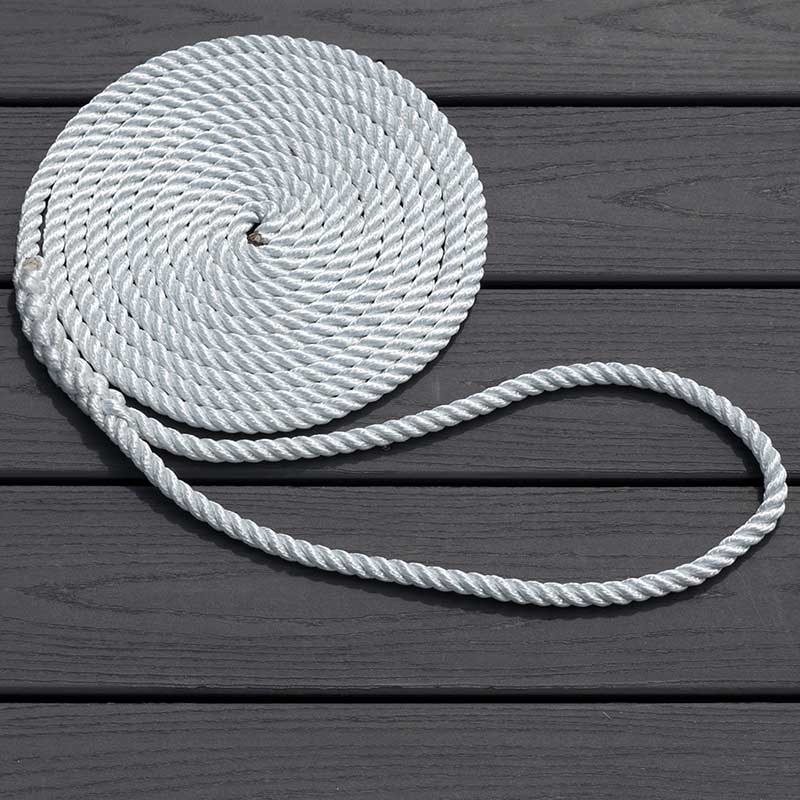
- Three-Strand Twist: Offers excellent elasticity and is easy to splice, making it a traditional choice for many boaters.
- Braided: Known for its smooth texture and flexibility, braided lines are easy to handle and store.
- Double-Braided: Combines the strength of braided lines with the elasticity of three-strand twist lines, providing a balanced option.
Explore further insights here.
Essential Tips for Dock Line Maintenance
Maintaining your dock lines is crucial for longevity and performance:
- Regular Inspection: Check for signs of wear, fraying, or UV damage regularly.
- Proper Cleaning: Rinse lines with fresh water to remove salt and debris, and dry them thoroughly before storage.
- Correct Storage: Store lines in a cool, dry place away from direct sunlight to prevent degradation.
For more maintenance tips, read more about this topic.
Conclusion
Selecting the right dock lines for your boat involves understanding materials, dimensions, and types, as well as practicing proper maintenance. By investing time in choosing premium dock lines, you ensure the safety and longevity of your vessel. Explore further insights here to make an informed decision and enjoy peace of mind while docking.